

A One Man Song Wave
I
I saw T as I entered the main corridor at Columbia River Correctional Institute (CRCI), right after badging in at the gate. He greeted me with a big smile as we crossed paths. “Hey, I’ll be there, I just have to go back to my unit first,” he said.
“How you doing?” I asked.
“Really good!” he shot back, still smiling as he headed up the stairs.
“Wow, better than me!” I said with a grin, continuing toward the chapel.
“Well you know, other than the obvious.” We both laughed and walked on.
As I set up the chapel room for our music lab, waiting for the class filter in, I thought about T.
He’s a repeat offender. On the outside he has a rhyming nickname that makes him sound like a natural disaster. They also call him a “one-man crime wave.” He laughed about it when he told us this, but he doesn’t like those names or that life. He’s not proud of any of it. He’s been in and out seven times, and he wants this to be the last time.
On the inside, in the music lab, we call him by his full first name, as he prefers.
We start our lab sessions with a circle to check in. Before they check in, each man says their name as they wish to be called. It’s not necessarily what the guards or the guys on the unit or in the yard call them, or even what their families call them. One guy wants to be called Mr. P, with his full last name, to be professional in the group. So that’s what we call him.
After the circle we do some breathing and singing exercises or sometimes have a mini music lesson, or both, then we have open lab time for collaboration and practice. We end with an open mic, where guys can share things they’re working on, or any song they know. A house band comes together, and we work on listening.
Some of the guys are always writing new stuff, and come with whole songs they can play and sing solo or with a little backing. Others don’t play an instrument, but have some verses. They don’t have the song form worked out, or even know what that means. But the band finds a groove, and they sing. No judgement, just support. Nobody knows where to end, or what the changes are, but you can hear the seeds of a song.
T doesn’t usually share at the open mic, but the guys all say he likes to freestyle in the yard when there’s a table of men jamming on guitars.
Months ago, when we were just getting music lab started, I remember relating to T’s artistic struggle: “I’m always starting new songs, but I can never finish anything,” he said.
I thought about my own scratchpads, overflowing with ideas once promising, left to wither on the vine, never performed or recorded.
On this night, we had an extended jam session instead of open mic. The house band was jamming on a groove somebody started. T took a knee in the middle of the band and just started singing a song. After a verse and a chorus I handed him a mic. He sang a couple more verses, and when the refrain came back, it hit like a song you’ve always known. The band all nodded along, smiling. They’d never heard this song before, either, but there they all were, playing it.
“Did you write that?” I asked, as he put the mic back on the stand and the band played on.
“I just came up with it, just now.”
The guy who said he can never complete songs had spontaneously sung a whole song into creation, multiple verses, a chorus and a hook. By all accounts this is what he does in the yard.
What else do we need to consider a song complete? A song is a slippery thing, and these men live in a slippery world.
Prisons, bunk assignments, privileges, activities, and chow times are changed or revoked without notice, visitations canceled or forgotten. Relationships from the outside world fade and fray. Addresses are forgotten or lost in a confiscated notebook, phone numbers changed, letters not delivered.
What does it mean to be complete in a place where everything is always pending and beyond control?
Maybe our definition of done is too idealistic.
Those moments in the chapel are already complete, in and of themselves. Music flows through time, and that night it flowed through T and the band and the chapel, complete, without beginning or end.
That was my experience, anyway, and I think T felt something different that night, too. I hope he gets to feel that more and more.
Instead of a one-man crime wave, he can be a one-man song wave. We all saw it.
~Steve Pings Rawley
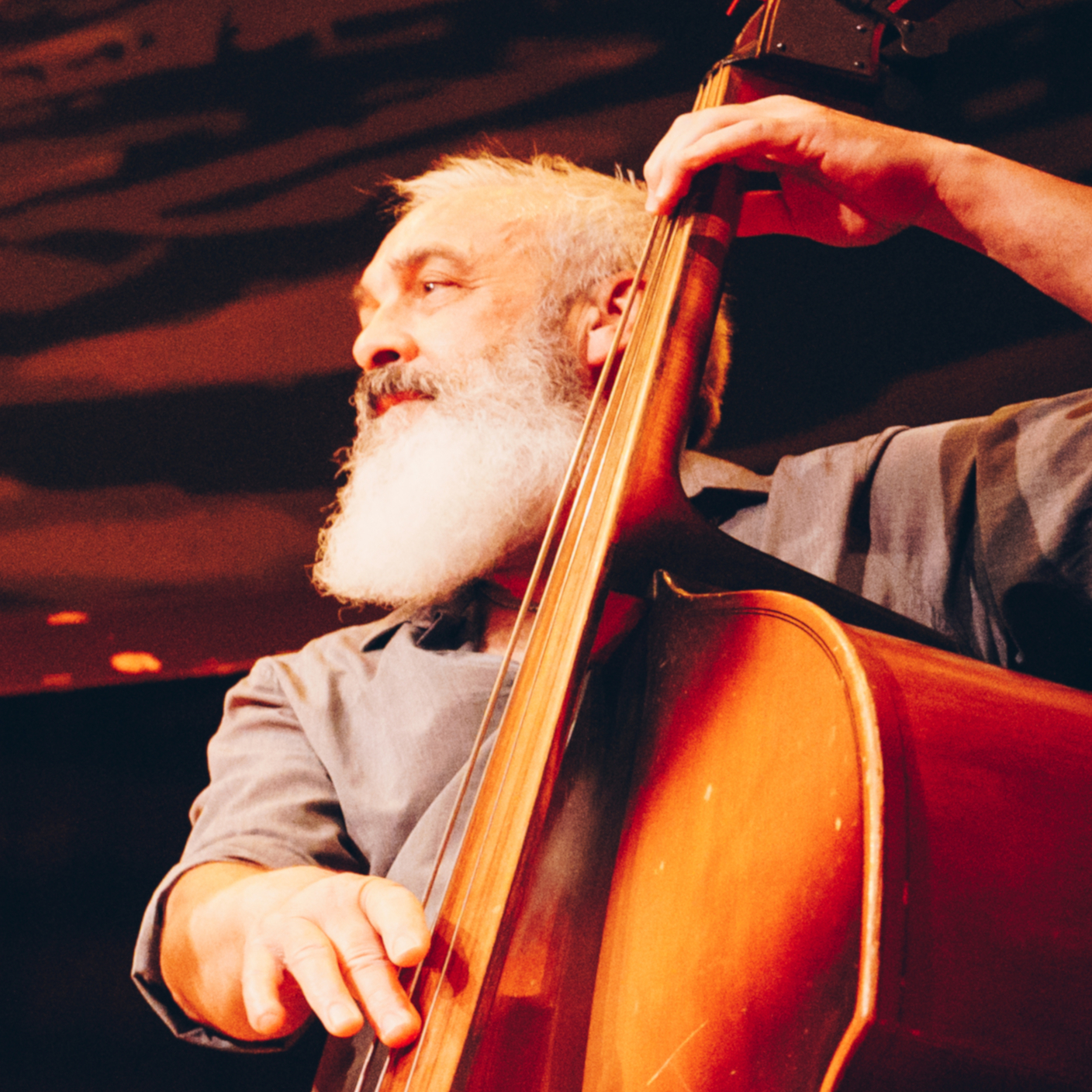
Steve Pings Rawley
Steve is a musician, composer, and arranger who plays upright bass with Portland folk-rock band the Prairie Benders. He believes deeply in the power of art to bring people together and transform lives. Outside of music, Steve works as a letter carrier for the USPS and enjoys baking bread, hiking, going to shows, and playing in the snow.